Friday, April 16, 2010

Anna Quindlen

Last night, Marilyn, Kris, and I headed down to the Margaret Mitchell Literature Center to hear Anna Quindlen tout her new novel, Every Last One.

I imagine that in fifty years, Quindlen will be one of the foremost writers of the late 20th and early 21st century. Not only is she a Pulitzer Prize winning journalist, but she is the "first writer ever to have books appear on the fiction, nonfiction, and self help New York Times bestseller lists."

On our way into the bowels of Atlanta, the traffic wasn't bad, but once we exited to 14th street, it was "crack" traffic. Big SUVs blowing black smoke, cabs hovering at the curbs, harried policeman directing traffic from ridiculously tall office buildings, and then those of us from the "burbs" just trying to get to Taco Mac* and a book reading. :)

I knew that Atlanta had its own version of the Tea Party that day, but I'm thinking, these folks need to go back to Valdosta.

Marilyn: John (her husband) said he was stopping off at the Tea Party on his way home from work.
Me: Go John!
Marilyn: I think he's just looking for refreshments.
Me: LOL

We ordered our tacos (I felt obligated), and then we headed across the street to the Margaret Mitchell Literature Center.

Since we ran a little late, most of the chairs in the center were full, and the ones on the left side faced a blinding sun reflecting off the glass building across the street.

The whole front row center was empty, so we sat there for like five seconds before we all exchanged glances and said, "Nah."

Carolyn: I'm not really a front row person.
Me: Unless it's Elvis.

We scuttled over to the left side and sat on the row behind this lone man. (Could have been a Tea Party Refugee). We settled in to wait on Anna Quindlen who ran late.

Marilyn: It's running late.
Me: Someone always needs to say that.

Carolyn: I'm glad we moved so we can make comments.
Me: Ask the guy in front of us if he reads her books.
Carolyn: You ask him. You're the blogger.
Me: Not that kind of blogger.

Eh, if he had been cute, I might have.

Behind me, I hear a woman ask her friend: "Will phenobarbital relax me?
I didn't turn around to see what she looked like.

The crowd was Buckhead, dressed in linens, high priced jeans and shoes, and one woman was wearing a turban.

Marilyn: I'd look good in that.

There were more men than usual, and Carolyn and I attributed it to her stint at a NYT columnist and her "Last Word" in Newsweek.

Me: Newsweek used to be such a good magazine, now it's pretty content free.
Carolyn: I like that.
Marilyn: Me too.

With a fifteen minute delay, Quindlen finally shows up and quips about how thankful she is that we braved the bumper to bumper traffic on Peachtree.

Me: Must be those tea partiers.

Dressed in black slacks, creamed colored blouse, and a three quarter length tweedish jacket, Quindlen opened with a famous writers's line: "Writing is easy, you just have to sit down at a typewriter and open a vein."

And from then on, Quindlen had her audience.

Articulate, witty, and intelligent, she interwove her writing experiences, her memorable book signings (where one four year old girl had her sign a copy of The Little Red Hen), her conversations with other writers, her family, her upbringing, as well as her favorite writers with a reading of a chapter from her current book, Every Last One.

She was terrific to listen to, and I was disappointed when she quit taking questions and went to sign books, a line that seemed much longer than the crowd at hand.

Some of the highlights:

  • Her favorite writers: Dickens, Austen, Eliot, Wharton, and Faulkner.
*twirls*

  • She also likes Don Delillo, Russell Banks, and Amy Bloom. She highly recommends a book by Ron Rush titled Serena.

  • She added that she had recently chatted with the matriarch of an upstanding New York family who at 85 seemed in wonderful health to Quindlen who commented on it. The woman corrected her assumption with "Oh, but I can't read anymore." Quindlen concludes, "Thatwould be a funeral bell toll for me."
[I nodded. *sighs* :( ]

Her conclusions on writing:
  • "I believe you can be taught to write but not be taught to write brilliantly. You have to be willing to be picked to pieces, and you have to learn to take that bleeding. It still hurts when I get back my manuscripts full of annotations. "
[See what I was training you for, former students?]

  • "Sometimes [writing] is like going into a trance -- you come out of it and you have written -- it's unexplainble. You just fire on all cylinders -- you can't teach someone to fire on all cylinders."
[I couldn't even find the cylinders on my students.]
  • "Every sixteen year old wants to be a poet. Why? Because there is less of it."

[Bwhahaha.]
Her next work:
  • A novel on aging -- she wrote one when she was 30 called Life in the 30s -- now she's gonna write one to be published on her 60th birthday -- it will be called Where the Hell Did I Leave My Keys?
[LOL]

On the newspaper and books:

  • "We ignored the Internet for ten years [we thought it was interesting concept that would never catch on]. Now we have to figure out how to make a living with our content on the Internet."
[It wasn't just the newspaper business -- education ignored it too -- myself included. :) ]
  • "America now has the capacity to be better informed than ever before -- but they complain they dont' have the time. I say, if people have time to watch Dancing With the Stars, they have time to be informed. That is all about choice."
[Informed? DWTS? Tough call.]
  • "There is no death of the book. It will not be either/or even though our country sometimes is bi-polar that way. There were be two different versions of reading. Folks thought TV would replace radio -- we have both. Ten years ago, book publishers worried that audio books would hurt hard covers, and there was a policy that the audio book come out three years after the book was published. Now, they come out at the same time. There may be the lessening of the book, but we will still have the book."
*twirls*

One of the last questions that Quindlen answered was "What author [living or dead] would you like to have dinner with and what would you serve?

Quindlen: Hmm. I might say Dickens, but no, I think Jane Austen. I would serve pizza. I'm pretty sure Jane Austen would not have had pizza before.


:)

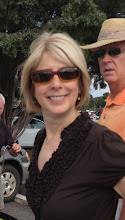
Carolyn, Kris, Marilyn, and I -- outside the Margaret Mitchell Literature Center.


* One comment about Taco Mac: Okay, I know it's a bar, but does it have to be so loud and so distracting? -- and why were men hanging out there like they were "skeered" to go home? Okay, I know there are like seventy- three televisions in there on ESPN and CNN -- but seriously, it was so....din. Din. Din. Din. One guy, tie loosened and hair in his eye, sipping a Blue Moon and watching the Braves, had his dry-cleaning over his arm which he carried about the bar -- occasionally the plastic would get the better of him and slide to the floor. Me: Yo, buddy? -- just hang it on your chair. Other scenes: a mowhawk (I mean, didn't those go out in the 80s?) -- and the guy sitting next to him looked like Eddie Vedder... and a whole table of guys -- all with their ball caps on backwards? Me: All of you? The place was packed with men [quite the menagerie] -- not that this is a bad thing -- but Gawd, it was so loud, I couldn't hear anything Marilyn, Kris, and eventually Carolyn, Marilyn's sister who met us there, said. Geez. Maybe men just don't need to be heard?

Eh.

Thursday, April 15, 2010

I Was Amelia Earhart

"It was a demented trip. The entire journey, flying as fast as possible like fugitive angels, took more than a month, during which time we spent our days feverish from the flaming sun or lost in the artillery of monsoon rains and almost always astonished by the unearthly architecture of the sky" writes Jane Mendelsohn in the voice of Amelia Earhart as she takes her circumnavigational flight in the summer of 1937.

In the novel, I Was Amelia Earhart, published in 1996, and written from two points of view, both first and third person, the reader both becomes Amelia and watches Amelia, as she and her navigator, Fred Noonan, attempt to circle the globe.

In the Acknowledgments, Mendelsohn tells that it [was] "inspired by the life of Amelia Earhart .. the characters and the events ... fictional."

Regardless, what Mendelsohn imagines that Earhart thought about, said, and did on that flight are not only interesting, but creative and fantastical, apparently based on what Menelsohn read about Earhart's personality and family background as well as that of her only other passenger, Noonan.

At one point in the novel before the flight takes off, Earhart and Noonan discuss aspects of their flight, and when Earhart says, "that's all, " Noonan then replies, "take me around the world. " His seemingly romantic response was anything but that -- Noonan was nervous, fidgety, but committed --- and knew that this opportunity would change his life... for the better. Earhart thinks, "we [both] must have ... known that we shared something, [perhaps] a secret craving for oblivion. But there is no such thing as oblivion. Oblivion is a lie."

The fictional conversations these two shared as they flew together, the weather they encountered, as well as the real meetings held with others on the ground as they refueled or stopped over were chronologically sound --- and Mendelsohn adheres to the history.

The power of this novel was the imaginative, and the way Mendelsohn chooses to present Amelia.

As reflective: "I was bolder than my mother would have liked. I insisted on running around in my bloomers. But my pluck and mettle delighted my father, an apprehensive man with a cowardly nature who liked to tinker with mechanical things and harbored delusions of intrepidity himself. He taught me how to take apart clocks.... and to drive like a professional."

"When she thinks of her father now, she sees him at the end of the day. The late afternoon, when the sun is setting, when it feels sad and beautiful, like the last day. When the sadness is too unbearable to think about."

and

"Planes used to be vehicles for dreaming. They were strong and curvaceous, manly and womanly at the same time, simple, almost old fashioned mechanical toys and vessels carrying the future. As soon as you saw a plane, you started dreaming. It was a thrill just to catch a glimpse of one. Back then, and its not that long ago, people in the world had never seen a plane, let alone been up in one."

As philosophical: "These were the days when she became reacquainted with herself, without hoping for anything except the satisfaction of knowing that she had explored an unknown sensation or feeling. It was as if what she had considered to be herself all of these years was only a magnified detail of an enormous painting whose entire composition and narrative she had never before known existed, let alone seen. And in this way she began to view the universe differently."

"With love comes the deepest fears of dying."

And, lastly, as poetic: "The sky, however wide and smeared with thick painterly clouds, now seems to her only one square inch of an infinite fresco of the world."

But this is only a smidgen of what Mendelsohn does with this intrusion into the world of American's favorite twentieth century heroine -- to tell you more would ruin the surprise of this novel.

We all know that Earhart disappeared over the Pacific Ocean on July 2, 1937. Well, I mean, we all know that Earhart disappeared on this flight.

Her disappearance remains one of the mysteries of the time. There is something about the disappearance of someone famous that inspires all of us to wonder -- "what happened? Did she crash and sink? Did she land on an island and live?"

This novel both intrigues and enlightens. :)

Monday, April 12, 2010

Sea of Glory

I actually like to read history.. if it's written well, and I have two friends who understand that about me -- and only pass history books to me if they are a layman's read --- they are Wingate, and my husband's friend, Dr. Jim.

Over the years I have known them, they have both given me very readable history books --- and in the last two years, I have read two really good history books, given to me by Dr. Jim, and both of them were by Nathaniel Philbrick.

Last year, I read Philbrick's In the Heart of the Sea: The Tragedy of the Whaleship Essex -- the real sea story of a sperm whale attacking a whaling ship and on which Melville based his signature novel, Moby Dick.

I can hear the groans of my former students.
Please. No. Gillham. No Moby Dick.

I love Moby Dick. I think I am the only person I know other than Andrew Jones, Mary Hafner, and Tyler Williamson who has read that novel.


I'm not countin' one of my former students who pretended to read it and proceeded to tell me that Moby Dick was a blue whale.

Hello. Blue whale? What movie did he watch?

*waves to Evan B wherever you are*

I have never laughed so hard in my life ...

unless it was the time another student ask me if Gregory Peck was Abraham Lincoln (after seeing a black and white movie still photo in the American Literature textbook of Peck, complete with stovepipe hat, from Hollywood's Moby Dick.)

Bwhahahahah.


I laughed until my sides hurt, but not before I quipped to her that " Yes, Moby Dick was Lincoln's first movie before he was president."

Bwhahahahaha.

I am totally off topic.

I just finished Sea of Glory, America's Voyage of Discovery: The U.S. Exploring Expedition 1838-1842.

Blog readers: Huh? What US Exploring Expedition?

That's what I said when Dr. Jim gave me the book -- I had never heard of it or the people involved, but the book turned out to be absolutely fascinating.

In the nineteenth century, six sailing vessels with a crew of hundreds that included geologists, mapmakers, biologists, and botanists, left New York city under the command of Charles Wilkes, nicknamed the Stormy Petrel, and sailed for the Pacific Ocean with an incredible goal -- to chart the Pacific Ocean from Antarctica to the Pacific Northwest.

Philbrick tells his reader about this lofty goal, especially in the 19th century: "Antarctica is the most inaccessible place on earth... and an entire vocabulary has been created to describe the appalling variety of icy hazards a navigator encounters when he approaches the continent."

Amazingly enough -- they accomplish this and much more --in spite of the less than sterling leadership of Wilkes -- who turned into a emotional barometer on the voyage -- he was nuts and petty, obsessed with the fact that he was not a "captain," and on whims would punish men whom he thought were trying to undermine him, almost all of which was unfounded.

Not only did Wilkes keep a journal, but so did officers under his command -- and their antipathy and anger at him, recorded for posterity, and an attempted court martial when the four year voyage was complete, showed how far they would all go for revenge.

After its return with its unbelievable collection that would contribute to a growing realization "that scientific pursuits such as geology, botany, anthropology, and meteorology were crucial to the progress of a nation," Washington began to pay for more exploration.

From 1840 to 1860, the federal government would subsidize fifteen naval expeditions --- at an enormous price. Philbrick writes, "Not even the race to the moon in the 1960s generated a financial commitment to science that rivaled the decades after the U.S. Ex. Ex."

The collections of the Ex. Ex., as it was called, became the foundation for the Smithsonian's scientific collection.

This contribution to America's scientific community seems huge -- why have I forgotten this in my own American history?

This book had it all -- complex characters, violence, intrigue, adventure, horror, and spectacle -- and it is history.

*scratches head*

Dang. Who needs fiction?

Well, I do -- but I love non-fiction when it reads like fiction. :)

Saturday, April 10, 2010

Cats don't do that.

Okay, I brag on my cats like other people brag on their children.

But.

Tallulah. Is. Awesome.

Keats is awesome too, but she is at that "whatever" stage. You know - -"whatever, I want, but I am not gonna entertain you" stage.

Last night, David and I were watching the end of the Masters.

Keats was taking in some hot air from the refrigerator, and Tallulah was somewhere in the back of the house.

All of a sudden, Tallulah, carrying her collar in her mouth, comes into the living room. She jumps on the ottoman and drops her collar in front of David.

Tallulah: Uh, Daddy? This came off. You need to put it on.

She sits on the ottoman and waits for David to put the collar on her.

Tallulah is a cat.

Cats don't do that.

Just sayin'.

Thursday, April 8, 2010

YOU LIE.

Those of you who follow my blog perhaps remember reading about how well Sarah and I did putting the lounge chair together.

Right.

High heels. Two left arms. Shoddy tools?

Well, David bought a new grill, and instead of us putting it together, he asked Andrew, my nephew, if he would like to make a few bucks by assembling the grill for him.

Andrew likes putting things together.

Well, as a kid, he mostly liked taking things apart, but now, he likes putting things together.

When he was young, we'd give him broken toasters or adding machines to disassemble --- he'd go to the basement or his room and take the appliance or small electronic thingy apart piece by piece and then try to put them back together. Sometimes he was successful -- sometimes not so much.

At times, I would go in his room -- and the parts for some object would be all over his desk -- its innards splayed -- his tools beside it.

It was a good way to get rid of old, small non-working appliances.

My sister?
Not. So. Appreciative.

David and Andrew determined that he would come over after class last night to assemble the grill.

He arrives about six. David and I are about to eat, so we leave him in the driveway with all of the parts of the grill spread around him -- plastic encased black things -- cylinder things wrapped in cardboard and taped down like state secrets -- as I like to say, "overpackaged" -- and little bitty shrinked wrap screws, nuts, and bolts adhered to cardboard -- it takes a machete to get the stuff unwrapped.

After dinner, I came out with a cocktail, parked myself in a plastic chair, and proceeded to watch Andrew put the grill together like it was entertainment.

At this point, Andrew has the cart with wheels that the grill sits on assembled and tightened down, and he's about to put on the grill body.

He looks at the directions.

He looks at the grill body.

He gives it a turn. He flips it. Examines it. In fact, he looks at it with puzzlement.

He picks up four lock washers and four 1/2 inch bolts and begins to secure them.

Then.

He checks out the catch pan.

Andrew: Hmmm. This says, "wheel side" on it -- if I put it on this way, then the grease tray will run into the front panel.

Me: *sips drink*

Andrew: No, that can't be.

Me: Looks like it you got something on backwards.

Andrew gives me a glare and then stares at directions again.

He takes off the catch pan. Flips it.

Andrew: Hmmm. I might have the front panel on the wrong side. It would be nice if something said right or left.

Me: Man. What a great night. I love this time of year. *sips drink*

Andrew: *stares at directions*

Me: Eh. Men write those directions; if a woman wrote it, it would say left or right.

Andrew: Not helpful.

Me: Just sayin'.

Andrew flips grill body. Holds up catch pan.

Me: What step are you on?

Andrew: Well, I was on six -- I now might be back to four.

Me: How many steps are there?

Andrew flips through directions: Nineteen.

Me: It'll be dark in a couple of hours.

Andrew glares at me.

Me: Let me see the directions. I love to read out loud.

Andrew: I'm gonna move the front panel and start over.

Me: Bwhaha. Step 19 says, "Tighten all bolts and nuts." What kind of step is that?

Andrew: Is there anything that you find not amusing?

Me: Gravity.

So, I take the directions -- and with my brain power, and Andrew's brawn and flexibility -- I mean, sometimes, he had to crawl under the control panel to attach the valves to the burner and then do something kind of contortionist with the valve tips -- so, these things do need youth, but occasionally, just to have someone read the directions with you -- and read them out loud with a real Southern drawl is helpful too.

*giggles*

Me: "Insert the igniter wires, which are attached to the underside of each burner, through the same hole in the grill body that the burner goes through and then attach the wire to the backside of the electronic igniter, which is attached to the control panel."

Andrew looks at me.

Me: He used "attached" three times in that very long sentence. Looks like this writer could use a thesaurus as well as a little lesson on dependent and independent clauses.

Andrew rolls his eyes.

Me: What? And. He wrote this: --WRONG HOSE LOCATION -- but does not show or say RIGHT HOSE LOCATION. I wish I could written that kind of instruction at the top of student papers -- WRONG. WRONG. WRONG. But not tell them what is right. Egads.

Andrew: Can I see those a minute? I mean, if you are through with your speech.

At one time, Andrew and I got tickled big time when the gas chimney had a sticker adhered to it (note I didn't write attached) that read "If you can see this note, then you have this part on upside down."

Bwhahah. Maybe that writer does have a sense of humor.

Meanwhile, the ice melted in my drink, and outside the light grew dimmer.

At 8:15, Andrew finished the grill.

We read this in the manual:

Estimated Assembly Time: 45 Minutes.


Me: I'm gonna email these people and tell them, YOU LIE.

Andrew: It does say, "do not attempt assembly if you are missing parts."

Me: Bwhahahaha. Wait. Are you talking to me?

BTW: Hmmm. I wonder if I could write directions for a living.

*makes a note*

O.M.G. Spring!

When I hear "spring break," it takes me back to teaching (LOL -- I'm acting like that was a long time ago), and the way that teachers, or should I just say the way I waited on spring break like an Israelite waited on Moses.

*flips back to Exodus*

BTW: Exodus. Good reading. Such drama!

I always counted down the days to spring break like it was a release from bondage --- a break from the five day a week sturm and drang of teaching, and when I waited for this particular week, I prayed for beautiful weather.

*twirls at sturm and drang*

Mostly, I prayed for the week to come, but a bonus was good weather... so many of my spring breaks were cold and rainy -- that unpredictable April weather that is so common here in Georgia. Many a time, David and I headed south -- only to shiver and wear sweatshirts and socks -- and that just doesn't scream --- spring.

But this week, and a lot of the world around me spring break, I awoke to beautiful weather -- gorgeous sunrises and weather that didn't resemble the typical weather when I worked and looked so forward to this week.

I looked out at that!

BTW: I've been on "break" all year.

*salsas*

Anywho.

This year, David wanted to go to the mountains during the school's spring break week because "work is slow since everyone is out of town."

I love the way he says, "everyone." It shows he doesn't go to Publix. There are still plenty of people in town. He also doesn't get out enough on Barrett Parkway.

So.

We went to our mountain house and spent five days there --- the weather was heavenly, and when we first arrived, the trees were bursting to show green, but hadn't.

Just so you know, when we go to the mountains, it's not all fun and games -- you know bear watching, great breezes, or sitting on the mountain and looking out at our land and thinking, "damn. Our land. Our guns. Our fences. Our deer. Our turkey buzzards. Our mountain. Our view. Our neighbor with fourteen rusted out cars and three trailers and four barking dogs. Our peace and quiet."

Meals still have to be cooked, laundry has to be done, and well, Tallulah and Keats have to be kept from falling from the second level. It's not all leisure and mountain air.

This time, David worked even more than usual. He's a yard man, and he loves getting in the acreage and pulling brush pines up, weeding, mowing, and doing all that kind of back breaking work.

I actually like to walk the acreage and stare at the beauty, but he likes to work.

We're a pair made in heaven.

I'm serious. We're companionable. We work. We do.

I also like to sit on the porch and read. I don't have Internet at our house --- so I get tons of time up there not to be distracted by Yahoo News or my General Hospital message board.

Man. What is this blog about?

*looks at title of blog*

Oh yeah. Spring.

As we spent the five day at the mountain house, the warm weather just encouraged all of those leaves and blossoms that were waiting to show their finery to pop out.

When we arrived there on Saturday, the daffodils and forsythia were blooming -- but most of the hard woods were still at the first advent of green... they were holding back -- but by the time we left on Wednesday, the green leaves of the hard woods were feathering out and strutting their stuff.


The crab apple tree whooshed pink -- its blooms shimmering in the early morning.


Would you look at that?
Oh my goodness.
God made that. He did.

It's on my land. My Land.

And

David's.

Someone has got to pull out those weeds.


ETA: David and this dog, Leo, who doesn't belong to us, start out for their early morning walk in the mountains.

Friday, April 2, 2010

The Life and Times of the Thunderbolt Kid

B and Jules: My apologies for yet another book review ..... :)

There is no doubt that Bill Bryson is a funny dude. His Walk in the Woods' work, part travel book, part memoir, part "hug a tree," and part history, has sections that made me laugh out loud. In this autobiographical piece, Bill and his childhood friend hike the Appalachian trail together and meet all kinds of people, mostly good, but some he and his buddy met were -- well, they were weirder than crop circles. He did a great job balancing the humor with the historical and more serious aspects of the work.

The Life and Times of the Thunderbolt Kid immortalizes Bryson's 1950s upbringing in Des Moines, Iowa, son of two newspapermen -- his father a sports writer, his mother, a feature editor.

Born in 1951, Bryson uses this year as his starting place, but rewinds to times before his birth, as well as fast forwarding it to the 1960s.

As he introduces his memoir, he humorously relates, "My kid days were pretty good ones, on the whole. My parents were patient and kind and approximately normal. They didn't chain me in the cellar. They didn't call me "It." I was born a boy and allowed to stay that way. My mother, as you'll see, sent me to school once in Capri pants, but otherwise there was little trauma in my upbringing."

The third of three, Bryson hardly mentions his siblings but details his parents, his neighbors, his teachers, and his friends in this riotous recreation of what it was like to grow up in the 1950s. He calls it a simpler time, and he pays a great deal of attention to making sure that he maintains that premise, even while mentioning that at times when America should have been frightened, like the Bay of Pigs, a kid like him was not. That is -- the beauty of an innocent childhood.

Bryson reiterates that innocence over and over.... and he believed that 1959 was a changing year.

At his best in this memoir is his writing about his friends and their families. One such family err on the side of boring; he tells his mother that he can't believe that she arranged for him to agree to a sleepover: "On the one previous occasion on which I had experienced their hospitality, a slumber party of which it turned out I was the only guest, or possibly the only invitee who showed up, Mrs. Milton had made me -- I'll just repeat that: made me - eat chipped beef on toast, a dish closely modeled on vomit, and then sent us to bed at 8:30 after Milton passed out [yes, his name was Milton Milton] halfway through I Got a Secret, exhausted after sixteen hours of pretending to be a steam shovel."

LOL -- this is Bryson's forte -- he takes the childhood experience, and ones like these are almost universal, and turns them into hilarious, and of course, exaggerated experiences.

Mixed in with his childhood memories are facts about the time: "In 1951, Harry Truman was president, but would shortly make way for Dwight D. Eisenhower. The war in Korea was in full swing and not going well. Julius and Ethel Rosenberg had just been convicted of spying for the Soviet Union, but would sit in prison for two years more before being taken to the electric chair. In Topeka, Kansas, a mild-mannered...."

Even though he peppered his memoirs with facts like that, he also colors it with his modern day disdain for the Republican party and George W. Bush. I would come across this passages and think, "Just shut up and write."

I like Bryson, but occasionally, his smug pontificating borders on my imagining him imagining his readers nodding at how smart he was to drag in his current political views, but to me, his smirking, sanctimonious comments about the current political climate are arrogance, and perhaps out of place?

Or maybe....

Call me "not in the mood."

Bryson is funny -- at times uproariously so -- especially when he so aptly put his childhood spin on it -- his passages about comic books, his relatives, laying out of school, his friends are slap the knees hilarious -- but when he starts being condescending, not so much.

This is a book for baby boomers ---- even with the agenda -- for Bryson reminds us all that "childhood passes quickly -- but ... adult hood .... is over in a twinkling."